


? Plant Tying Machine – Buyer FAQs & Professional Guide
If you are sourcing plant tying machines for wholesale or agricultural projects, here are the key questions buyers usually ask.
❓ What should I consider when choosing a plant tying machine?
Key factors include:
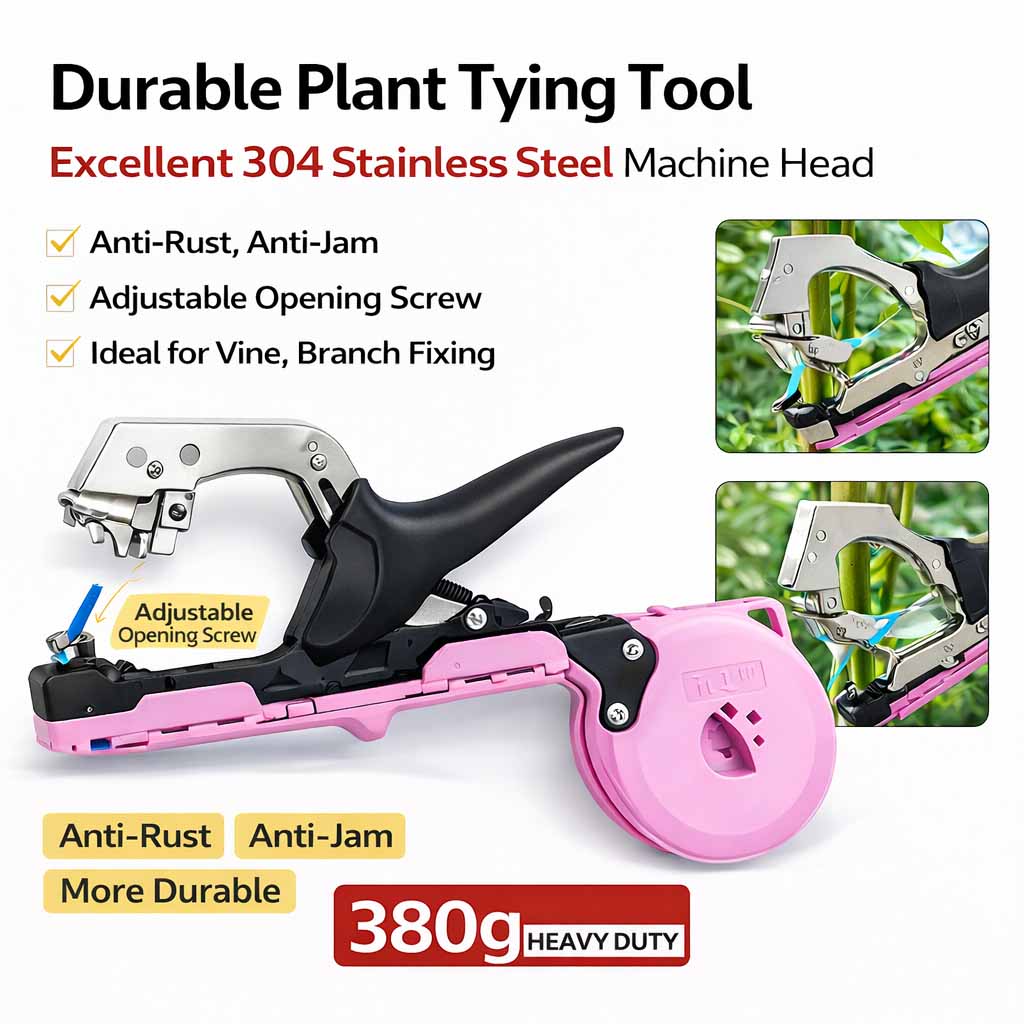
- Weight (usually 400g–500g for comfortable use)
- Durability of materials
- Staple compatibility
- Tape width support
- Ergonomic design
❓ What is the difference between cheap and high-quality models?
High-quality models offer:
- Smoother operation (less jamming)
- Stronger binding force
- Longer lifespan
- Better internal structure
Cheap models may have frequent staple jams and lower durability.
❓ Can I customize the product (OEM)?
Yes. Most manufacturers support OEM customization:
- Logo printing
- Color customization
- Packaging design
- Product specifications
❓ What is the typical production capacity?
Factories can usually supply:
- Small orders: 100–500 units
- Bulk orders: 1000+ units
Lead time depends on quantity and customization.
❓ What is the standard staple model?
The most common is:
- 604C Universal Staples
They are widely compatible with most plant tying machines.
❓ How about maintenance?
To keep the machine working smoothly:
- Add lubricating oil regularly
- Clean residue after use
- Replace worn blades if needed
❓ What problems may occur?
Common issues include:
- Staple jamming → caused by low-quality staples
- Tape not cutting → blade needs replacement
- Loose tying → incorrect operation or worn parts
❓ Is it suitable for export business?
Yes. Plant tying machines are popular in:
- Europe
- South America
- Southeast Asia
- Middle East
They are widely used in commercial agriculture.
❓ Why is it a good investment?
Because it:
- Saves up to 60–70% labor cost
- Improves working efficiency
- Reduces plant damage
- Increases productivity
Leave a Reply